
Montana Estimated Tax Payments (2026)
 Keeper StaffKeeper is a delightfully smart tax filing software that's especially useful for people with 1099 contracting and freelance income. Our blog breaks down IRS guidance with real-world examples and analysis by tax professionals — empowering taxpayers to save money and take control of their finances.
 Reviewed byIsaiah McCoy, CPAIsaiah McCoy is a Certified Public Accountant (CPA) in Miami, Florida with over a decade of experience in tax, accounting, and financial analysis. He holds a Bachelor of Science degree in accountancy and a Master of Taxation degree from Arizona State University. Isaiah has also earned a Master of Business Administration with a finance concentration from LSU Shreveport. Isaiah has worked within several industries, including public accounting (serving clients in the natural resources, real estate, and not-for-profit sectors), higher education, and healthcare. In his free time, he enjoys traveling and watching soccer and is fluent in Spanish.
If you're self-employed in Montana, you likely need to make quarterly estimated tax payments to both the IRS and Montana Department of Revenue. State payments are generally required in Montana once you expect to owe $500 or more after withholding. Estimate your federal and Montana quarterly payments below.
Your details
Set up quarterly estimated payments with Keeper
Avoid IRS penalties and the stress of quarterly payments. Set up automatic tax payments when you file with Keeper or get help from a pro.
Set up quarterly paymentsFull tax breakdown
Do you have to pay estimated taxes in Montana?
Yes. If you're self-employed in Montana and expect to owe $500 or more in Montana income tax for 2026 after withholding, you must make quarterly estimated payments to Montana Department of Revenue. That is below the federal $1,000 threshold, so most part-time freelancers owe them too. Montana taxes income at graduated rates up to 5.65%.
When are Montana estimated taxes due in 2026?
Montana's 2026 quarterly payments are due April 15, June 15, September 15, and January 15, in four equal installments, on the same calendar as your federal payments.
Q1, April 15, 2026
Q2, June 15, 2026
Q3, September 15, 2026
Q4, January 15, 2027
How much should you set aside for Montana estimated taxes?
Plan to set aside 25% to 30% of your net self-employment profit to cover federal and Montana taxes combined, then confirm the exact amount with the calculator above. On $50,000 of net freelance profit, federal self-employment tax alone is about $7,065 (15.3% on 92.35% of your earnings). On top of that you'll owe federal income tax and Montana income tax at graduated rates up to 5.65%.
How do you avoid a Montana underpayment penalty?
To avoid a Montana underpayment penalty, pay the smaller of 90% of your 2026 Montana tax or 100% of your 2025 tax, in four on-time installments. Paying the full amount late doesn't help; each installment has to be on time. You can estimate a federal underpayment penalty here.
What deductions lower your Montana estimated taxes?
Because estimated taxes are based on your net profit, every business write-off you claim lowers what you owe each quarter. Common deductions for 1099 workers, reported on Schedule C, include the home-office deduction, car mileage, phone and internet, software, and supplies. You can also deduct half of your self-employment tax, and the federal Qualified Business Income (QBI) deduction can remove up to 20% of your qualified business income, which flows through to your Montana return in most states.
Keeper's 1099 tax calculator estimates your bill after deductions, and our write-off guides list the deductions for your line of work.
Note: Figures are current for the 2026 tax year and are for planning, not tax advice. Confirm the details with the Montana Department of Revenue before you file.
How to file quarterly taxes in Montana
Filing quarterly in Montana means two separate payments each period: one to the IRS for federal tax, and one to Montana Department of Revenue for your state taxes. Here’s how to do it.
- Confirm you need to pay. You owe estimated payments when tax isn’t withheld from enough of your income — 1099 or freelance work, investment income, or other untaxed income. Federal and Montana run separate tests: the state generally requires estimated payments if you expect to owe $500 or more in Montana tax after withholding and credits, subject to its safe-harbor rules.
- Calculate your federal estimate. Use the Form 1040-ES worksheet (or tax software). Estimate your full-year income, add your federal income tax and self-employment tax, subtract anything already withheld from a paycheck, and split the rest across the year. The estimate at the top of this page gives you a starting number.
- Calculate your Montana estimate separately. Work out your Montana amount on its own using Form ESW. Don’t just send part of your federal payment to the state — the Montana calculation is separate, based on your Montana income tax, credits, and any Montana withholding.
- Pay the IRS. Pay through IRS Direct Pay (or EFTPS) and choose the estimated tax / Form 1040-ES option. Select tax year 2026 and save the confirmation number. This money counts only toward your federal taxes.
- Pay Montana separately. Make a second payment to TransAction Portal (TAP) and select the Form ESW estimated payment for 2026. Save that confirmation too. This money counts only toward your Montana taxes.
- Repeat on each deadline. For 2026, federal estimated payments are due April 15, 2026, June 15, 2026, September 15, 2026, and January 15, 2027. Montana uses those same four dates.
Steps reflect 2026 rules and are for planning, not tax advice.
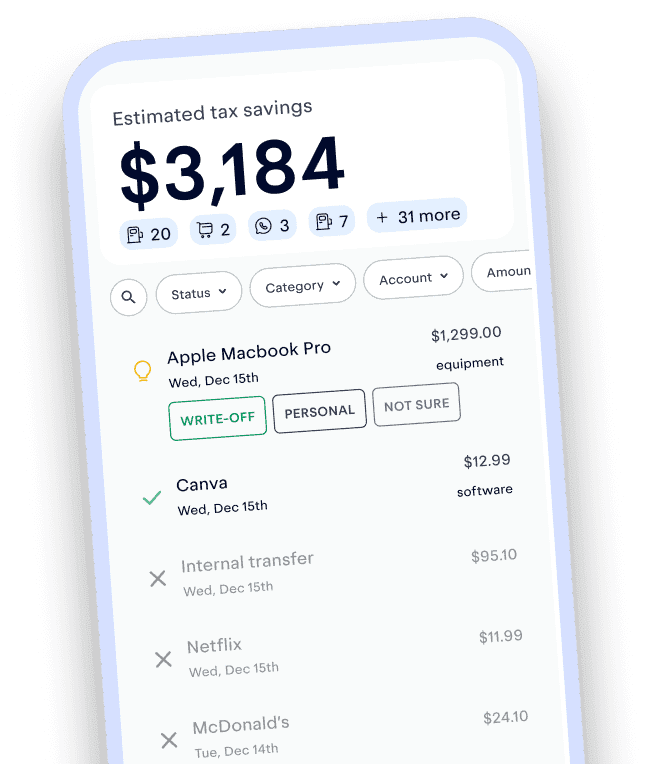
Never miss a quarterly tax deadline with Keeper
Keeper estimates what you owe each quarter, reminds you before every due date, and files your return with a tax pro reviewing every deduction.
Get started freeFrequently asked questions
Yes, if you expect to owe $500 or more in Montana tax for 2026 after subtracting withholding and credits.
April 15, 2026, June 15, 2026, September 15, 2026, January 15, 2027.
Montana uses graduated brackets for 2026, with a top marginal rate of 5.65%. The top rate applies only to income above the highest bracket threshold, not to your whole income.
Pay the lesser of 90% of your 2026 Montana tax or 100% of your prior-year tax, in timely installments.
Quarterly taxes by state
Hover a state to see its top income tax rate and how its quarterly payments work.