
26 Tax Write-Offs for Independent Tattoo Artists
NAICS business codeYour NAICS business code is a six-digit string of numbers that shows the type of work your business does. NAICS stands for North American Industry Classification System. When you do your taxes, you'll enter it in Box B of your Schedule C.812990
 Reviewed bySabrina Wiechart, CPASabrina is a Certified Public Accountant (CPA) with over 15 years of experience in tax preparation, planning, and S-Corp compliance. She holds a Master’s in Accounting and specializes in helping self-employed individuals make smart tax decisions. Sabrina is passionate about simplifying the S-Corp process and making sure every client keeps more of what they earn.
You likely decided to become a freelance tattoo artist because you're creative and enjoy working with people. It probably wasn't because the idea of filing self-employment taxes fills you with joy.
The good news is, freelancers and business owners like you can write off business expenses necessary for their business. These can include anything from the cost of tattoo supplies to an art magazine subscription that inspires your designs.
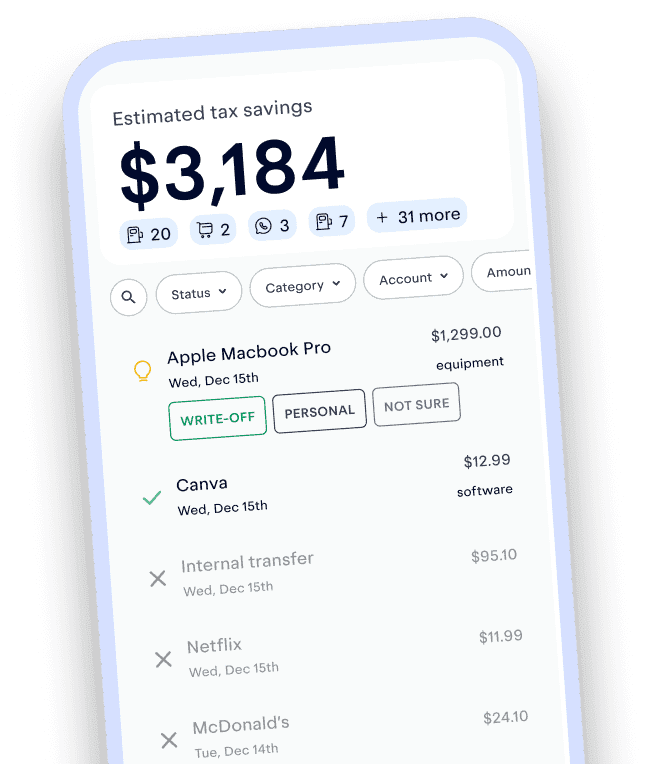
So if you get expense-tracking down to a fine art (say, with the help of an app like Keeper), you'll be sure to find the process of filing your return less stressful thanks to all your tax savings. Let's go through even more examples.
Write off everything you use to for tattooing, including needles, ink, disinfectant, and more.
Write off fees for training and the certifications you need to work as a tattoo artist.
This covers training that maintains or improves skills for the work you already do. Courses that qualify you for a new trade or profession are not deductible.
Lights, backdrops, and other supplies you use to film are considered tax write-offs.
If you rent a studio or office, you can write it off.
Subscriptions to tattoo magazines and artist newsletters are considered tax write-offs.
Squarespace, Wix, GoDaddy, and other website service fees are fully tax-deductible.
Print and online advertising costs for your business are considered write-offs.
Write off the tools you use to create assets, schedule posts, or pull analytics.
If you need to hire an editor, designer, photographer, or other creative pro, write off what you pay them.
Pay any one contractor $600 or more in a year and you'll need to file a Form 1099-NEC for them.
If you buy a phone or laptop and use it for work, it's partially deductible — in proportion to how much you use it for business. The device itself is depreciated on Box 13 (or expensed under Section 179); your monthly service plan belongs on Box 27b, and accessories on Box 22.
Protecting yourself and your business with liability insurance? It's a write-off.
If you drive for work ...
If you drive to and from studios or to pick up tattoo supplies, you can claim car expenses on your Schedule C.
Parking for a meeting downtown, or any other work trip, is tax-deductible!
A toll while driving to or from a work destination is tax-deductible!
If you buy a new car, you can write off part of the cost every year for five years.
Flashlights, tire iron, duct tape, and other tools you may need in your vehicle are deductible.
Car insurance monthly fees, registration, even roadside assistance are partially deductible — if you use the actual expense method. The standard mileage rate already covers them.
Oil changes, repairs, and regular checkups are deductible if you use the actual expense method. Take the standard mileage rate instead and they're already baked into your per-mile deduction.
If you discuss work at a restaurant ...
If you meet a client over food or drink to talk about a tattoo they're hoping you'll work on, go ahead and write off the business meal.
If you discuss work with a coworker, mentor, client, or prospective client, it's a write-off — 50% of the tab.
If you leave town for work ...
Going to an out-of-town tattoo convention or masterclass? Write off your travel costs.
Planes, trains, and car rentals are all work-related travel costs that can be written off.
When you travel for work, lodging expenses such as hotel rooms or Airbnb are write-offs.
When you're traveling for work, your meals are 50% deductible — takeout included. (Long-haul truck drivers subject to DOT hours-of-service rules can deduct 80%.)
If you work from home ...
If you do at least some of your work from a dedicated home workstation, like coming up with new tattoo designs, working on client development, or managing your professional social media, don't forget to claim home office write-offs.
A desk, chairs, lamps, and other home office necessities are all tax write-offs. Anything over about $2,500 gets depreciated on Form 4562 instead of written off all at once.
Repairs just for your home office are 100% deductible. Repairs to the rest of your home count too, prorated by your business-use percentage on Form 8829.
Gotta keep the lights on in your home office! A portion of your electricity bill counts.
Whether it's rental or homeowners insurance, you can write off a portion through your home office deduction.
It'd be hard to work in an office without running water, huh? Your water bill counts.
You need internet to do your job! If you claim a home office, deduct it prorated on Form 8829 along with your other utilities. Internet you pay for on the road, purely for work, is 100% deductible.
You may also enjoy learning about ...

Advertising Expenses and How To Claim Them
Advertising is a great way to attract new customers and keep old ones, and it’s also 100% tax deductible. Find out creative ways to increase your advertising write-off.
 By Sarah York, EA
Is My Subscription A Tax Deduction?
How To Deduct Your Cell Phone Bill on Your Taxes

Can You Write Off Clothes for Work?
The Last Schedule C Guide You'll Ever Need

How To File Your Self-Employment Taxes in 7 Easy Steps
Track and claim every eligible deduction with Keeper
Keeper scans your accounts for write-offs and files your return — with tax pros reviewing every one.
Try it free