



Key takeaways
Paid AI tools count as write-offs when you use them to run a profit-motivated online selling business.
This includes tools for product research, listings, photos, video, marketing, and customer support.
Included AI features don't create a separate deduction. Deduct the platform or subscription fees you actually paid.
Use one subscription for several stores or personal projects? Split the cost and keep your math.
Can online sellers deduct AI tools?
Yes! If you pay for AI software to help run or grow an online selling business, it can count as a write-off. The IRS small-business tax guide says a business expense must be ordinary and necessary for your work.
That applies whether you sell through a Shopify storefront or a marketplace such as Etsy, eBay, or TikTok Shop. To claim it, make sure these two things are true:
A business: You run the store to make a profit. Casual sales from cleaning out your closet may be a hobby rather than a business.
Business use: The tool helps with work such as researching products, building listings, editing product images, marketing your store, or supporting customers.
You do not need an LLC to claim business expenses. Keeper’s online seller write-off guide covers the rest of the costs that can come with running a store.

10 AI tools online sellers can write off
Store planning and platform AI
1. ChatGPT can help research a market, compare products, draft listings, and turn store data into a working plan. If you use ChatGPT to help you with any business tasks, it counts as a write-off. If you use the same subscription for both personal and business chats, deduct the business-use portion.
2. Shopify Sidekick and Shopify Magic can generate product descriptions and images, answer questions about store data, and complete tasks in the Shopify admin. If you pay for Shopify, your subscription counts as a write-off.
3. eBay’s AI listing tools can draft product descriptions and reduce repetitive listing work. If you pay eBay seller fees or for a Store subscription, deduct the business costs you actually paid—not a separate amount for an included AI feature.
Listings and marketplace research
4. Vela bulk-edits and manages listings across Etsy, Shopify, eBay, and other marketplaces, with AI tools that can refine titles, descriptions, tags, and SEO metadata. If you use Vela to manage your online store, it counts as a write-off.
5. eRank gives Etsy sellers keyword and trend data, listing audits, and AI-assisted title, description, and tag ideas. If you use eRank to do research for your business, it counts as a write-off.
Product design, photos, and video
6. Canva can generate and edit product images, resize store graphics, remove backgrounds, and create marketing assets. If you use Canva Pro to create or edit images for your store, it counts as a write-off.
7. Kittl uses AI to generate and edit designs, create product mockups, and prepare graphics for print-on-demand products. If you use Kittl to create products or listing images for your store, it counts as a write-off.
8. Photoroom uses AI to create product photography, remove backgrounds, and generate image variations. If you use Photoroom for listing images or ads, it counts as a write-off.
9. CapCut Pro uses AI to generate scripts, captions, voiceovers, and short product videos for social media. If you use CapCut Pro to edit store ads, it counts as a write-off.
Marketing and retention
10. Omnisend automates email and SMS campaigns, with AI features for copy and personalization. If you use Omnisend for email marketing, it counts as a write-off.
Deduct what you paid—not free or bundled AI features
You can only deduct platforms or subscription fees you actually paid. If a platform includes an AI feature for free, you cannot claim a second deduction for the feature. Deduct the business-use share of the platform fee instead.
Software vs inventory
Products you buy to resell usually belong in inventory and cost of goods sold. An AI subscription used to research, list, or market those products is a software expense instead. It does not become inventory just because it helps you sell inventory.
Most recurring AI subscriptions and usage charges can go in Part V of Schedule C under “Other Expenses.” A label such as “AI and ecommerce software” makes the total easy to trace. If you use a tool only to create or run ads, advertising is another reasonable category. Pick one and use it consistently.
Split subscriptions across stores and personal use
Amount paid × business-use percentage = potential deduction
Say you pay $40 per month for a design tool and use it 75% for product photos and 25% for personal projects. Your potential business deduction is $30 per month.
If the same plan supports two stores, divide the business share again using a reasonable method such as projects, exports, orders, or time. Keeper supports multiple businesses and lets you split an expense between them, making it easier to keep each business’s share organized in the right place.
Keep a record of each expense
The IRS recordkeeping guide recommends keeping records that support the amount, date, and vendor of each expense.
Save the invoice: Keep the vendor, date, subscription or usage charge, and amount.
Match the payment: Keep the card or bank transaction, especially when the billing name differs from the product name.
Show your split: Write down how you divided business and personal use or allocated one plan across stores.
Subtract refunds: Track refunds and promotional credits. You can only deduct what you paid.
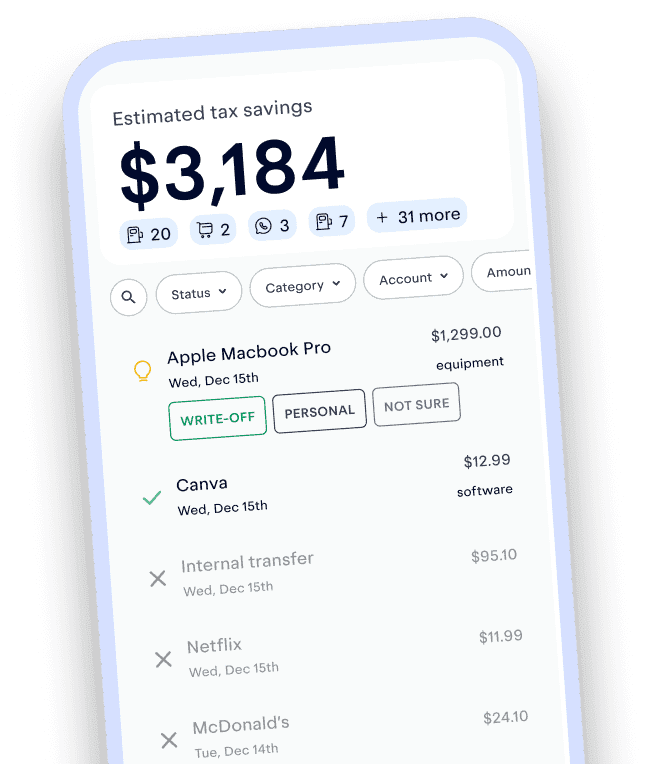
You can do all this yourself, or let Keeper do the work for you. Keeper automatically tracks transactions, categorizes each expense, and keeps the records connected to your business.
Track and claim every eligible deduction with Keeper
Keeper scans your accounts for write-offs and files your return — with tax pros reviewing every one.
Try it freeFAQs about AI write-offs for online sellers
Yes. If you run an online selling business and pay for an AI tool that helps operate or grow it, the business-use portion counts as a write-off.
Yes, when you are actively preparing a real business to open. Costs paid before the store begins operating may be startup costs instead of current expenses.
Most subscriptions and usage charges can go in Part V under “Other Expenses.” If a tool is used only for ads, advertising may also fit. Pick one category and use it consistently.
Yes. Paid AI tools, including credits, API calls, image generations, and other usage fees, count as write-offs when you use them for your online selling business.
Allocate the cost among your stores and deduct each business’s share. If you use Keeper, you can split the AI subscription in the app, and we'll split recurring expenses going forward.
There is no separate deduction for a free feature. Deduct the business-use share of the platform subscription or other software fee you actually paid.

Matthew King is the co-founder and CTO of Keeper, where he leads the engineering team. We use AI to bring high-quality accounting and tax advice to everyone. Before Keeper, Matt was an engineering manager at Second Measure, helping investors to understand consumer purchase patterns. He was also an engineering manager at Clari, where he built tools to help sales managers forecast deal flow, based on data inside their private Salesforce silos.
View full bio4 sources
- Publication 334 (2025), Tax Guide for Small Business · irs.gov
- AI-enabled commerce assistant, Sidekick, designed to make it easier for you to start, run, and grow your business on Shopify. · shopify.com
- Selling is now even easier with AI · pages.ebay.com
- Publication 583 (12/2024), Starting a Business and Keeping Records · irs.gov
This article is for informational purposes only and isn’t tax, legal, or financial advice. Tax rules change and depend on your situation, so talk to a tax professional about yours.