Once I get a good job, I’ll make it.
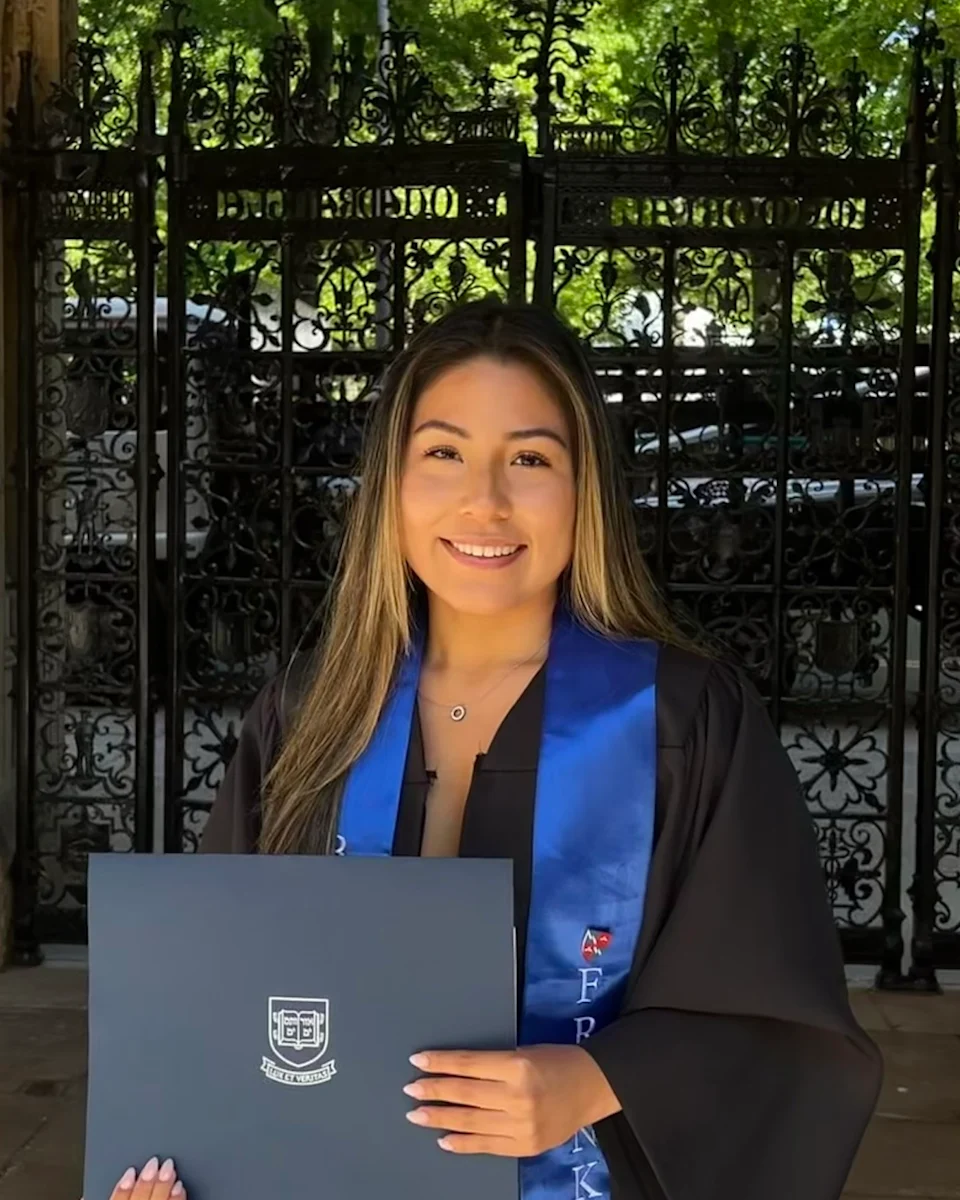
At 22, Andrea landed a $78K offer at Microsoft, more money than her parents had ever seen. Living on her own showed her one paycheck couldn’t buy the freedom she wanted, so she built five more income streams.
Income streams
- Program manager (full-time job)
- Nonprofit contract work
- Brand deals, UGC & TikTok payouts
- Digital products
- High-yield savings interest
- Stock dividends
Tax setup
- Has W-2 income plus five side income streams
- Tracks and claims write-offs like equipment, office supplies, and utilities
- Claims the home office deduction for a share of her rent
- Invests in a Roth IRA for tax-free growth
- Maxes out her 401(k), which lowers this year’s taxable income
What did “making it” look like?
Andrea grew up in New York, the only child of parents who came from Peru in the late ’90s. Her mom cleaned houses and her dad worked as a plumber. Money was tight, and she learned to compare prices at the grocery store and put part of every birthday check away for a rainy day.
Like many children of immigrant parents, she became the family’s translator early: at the bank, at the doctor’s office, and anywhere English was a barrier. Navigating the SAT and college applications was something she had to figure out on her own. Her life plan was simple. Go to college, get a good, stable job, and you’ve made it.
A few days before Thanksgiving of her senior year, the email came. Microsoft was offering her a spot in its new-grad program: a $78,000 base salary, plus a bonus and stock. She ran downstairs to tell her mom, called her dad, and cried.
It was money that neither of my parents had ever seen, especially as young as 22 years old.
Why wasn’t one paycheck enough?
With the promise of a great salary, she moved from New York to Dallas but quickly realized her paycheck covered her basic expenses (rent, groceries, gas) with little cushion for much else.
By then she’d found the FIRE movement (financial independence, retire early) and its promise: invest enough, early enough, and work becomes optional long before 65. That changed the math.
If I really wanted to set myself up for financial freedom, I couldn’t just rely on the single source of income.
“I want the freedom to pivot, the flexibility to rest, and the power to choose how I want to show up in the world.”
Where did the first extra income come from?
As a child, Andrea watched her dad take on extra shifts and side projects her whole life. In college she’d stacked two or three jobs at a time: tutoring math, swiping students into the cafeteria, working the gym’s front desk, contact tracing during COVID. So she went looking for remote work she could do after hours.
She landed a contract role with a nonprofit, doing data entry and market research. It paid consistently every month, and that extra cash went straight into investing.
How did TikTok turn into a business?
With the ignition of her interest in the FIRE movement, Andrea went to TikTok scouring for more tips. Everyone on her feed said to open a Roth IRA. Nobody showed you how to actually do it.
Everybody would talk about how important it is to invest in it, but no one actually showed you how to do it.
So she screen-recorded every step and posted the tutorial. It took off. Viewers told her they’d finally opened accounts because of it, so she kept going: automating investments, opening a high-yield savings account, and other how-to steps most finance content skipped.
Invigorated, she put an email in her bio but got months of junk and scam messages. Then, as the tutorials gained traction, companies started reaching out. Her first brand deal paid $1,000. She’s since added UGC (videos brands run on their own channels) and a deal with Dell.
I never thought that a 30-second video could get paid that much.
What does it cost her?
Her evenings. She logs off from her day job around 5, and most nights go to contract work, filming, or editing, sometimes until midnight.
Early on, she gave herself 15-minute breaks between tasks and burned out. Slow growth on TikTok made it worse, with the nagging question of whether anyone even cared. Now she schedules 30 minutes to an hour between tasks and takes a week or two off every summer.
A weekday for Andrea
- Day job
- Side income
- Time off
- 7amWorkout (Time off)A walk, the gym, or yoga.
- MorningDay job (Day job)Meetings and program management.
- 5pmLog off and reset (Time off)A walk, a snack, maybe Netflix.
- 6pmSide shift (Side income)90 minutes of contract work, or filming and editing for a brand deadline.
- 7:30pmDinner (Time off)Then 30 minutes to shower and chill.
- 9pmSecond shift (Side income)Content, digital products, or contract work, sometimes until midnight.
What surprised her at tax time?
Her first year with side income, Andrea didn’t realize she owed self-employment tax on it: the Social Security and Medicare an employer normally splits with you was now fully on her to pay. She’d heard about deductions, but the options were so overwhelming that she claimed basically none that year.
Andrea tracked 12 months of credit card statements in Excel and totaled her deductions by hand.
The stakes have grown since. In her first year, she estimates she owed around $3,000 on her side income. This year is shaping up to be her biggest yet, and she expects that number to land closer to $8,000 to $9,000. So she’s learning what counts: creator gear like her tripod and phone stand, office supplies, and possibly part of her home if she uses it for the business.
Two weeks before our interview, she started using Keeper. Connecting her credit card surfaced office supplies she hadn’t thought to count, and Keeper asked about lunches she’d have forgotten were business meetings.
I would manually have to do that during tax time, go back to January and be like, what did I spend back then?
Her plan now is to use Keeper to stay on top of her expense tracking, so she’s armed and ready for next tax season.
How each of her streams is taxed
Six streams, five different tax forms.
- Day job salaryW-2
Tax is withheld from each paycheck, but withholding doesn’t account for side income, which can leave a balance due in April.
- Nonprofit contract work1099-NEC
Business income on Schedule C. Profit is subject to income tax plus 15.3% self-employment tax.
- Brand deals, UGC & TikTok payouts1099-NEC or 1099-K
Same Schedule C. Gear, subscriptions, and supplies used for the work can be written off.
- Digital products1099-K, if any
Schedule C too, after platform fees.
- Savings interest1099-INT
Ordinary income. No self-employment tax.
- Stock dividends1099-DIV
Qualified dividends get lower capital-gains rates. No self-employment tax.
General information, not tax advice. Your forms and rules depend on your situation.
Shooting for Coast FIRE
Most of Andrea’s extra income goes into the stock market and her retirement accounts. By her own estimate, she’s already hit Coast FIRE for retiring at 65: she has enough invested that it could grow into her retirement without another contribution. Now she’s pushing to make that 50.
While Andrea is shooting to hit her Coast FIRE goals, some of that extra money goes to enjoying life now. She took her mom to Italy last year, and they’re planning Turkey next.
You’re never going to have your parents be this young, right?
What she’s after isn’t a bigger number. It’s the option to walk away from a job that isn’t treating her right, build her own business, or grow her brand, without money hanging over the decision.
How to build multiple income streams like Andrea
Write down your why
Hers is peace of mind and control of her time. It’s what gets her through the 9pm shift when she could be watching Netflix.
Start with a skill you can sell next week
Her first stream wasn’t content. It was a remote contract role doing work she already knew how to do, with a predictable monthly check.
Find the gap in your niche
Finance creators kept telling people to open a Roth IRA, but nobody showed how. Andrea’s step-by-step tutorial filled that gap and became her breakout video. Study what’s already out there in your space, and make the thing people are still asking for.
Mix active and passive income
Her contract work and brand deals pay only when she puts in the hours. Her digital products, savings interest, and dividends earn while she’s sleeping. Pair work you trade time for with income that grows on its own, even if it starts small.
Schedule rest like a deliverable
Time blocks work for her only with 30 to 60 minutes between tasks and real time off every year.
Plan for taxes on day one
Earning self-employment income, even alongside a W-2, means:
- Tracking business expenses as you spend
- Setting aside money for self-employment tax
- Paying estimated quarterly taxes
- Reporting it on Schedule C when you file
Andrea teaches you how to make more. Keeper helps you keep more of it.
Every money move comes with a tax catch. Here’s how to plan for each one.
- Her moveOpened a Roth IRA at 19The tax catch
Roth contributions don’t lower your tax bill today, and the right to contribute phases out at higher incomes.
Keep moreDecide whether you’d rather save on taxes today or later.
- Traditional 401(k): lowers this year’s taxes. Best if your tax bracket now is higher than you expect it to be in retirement.
- Roth: taxed now, tax-free in retirement. Best if you expect a higher bracket later or want decades of tax-free growth.
- Earning too much for a Roth IRA? A backdoor Roth can still get you in.
- Her moveEarns multiple streams of self-employment incomeThe tax catch
You owe income tax plus 15.3% self-employment tax on your business profit, plus taxes on your W-2 salary.
Keep more- Lower your taxable profit with write-offs, like the equipment, software, and supplies you use for the business.
- Open a Solo 401(k) or SEP IRA for the side income. Contributions lower your income tax too.
- Already maxing your day-job 401(k)? Your business can still put an employer contribution into a Solo 401(k) on top of it.
- Her moveTakes brand dealsThe tax catch
Products a brand sends in exchange for content are taxable income at their fair market value, just like a cash payment, and they count toward self-employment tax.
Keep more- Log each item’s value when it arrives.
- Report it with the rest of your business income.
- If a brand sends you a 1099, check that the value it lists matches your records.
- Her moveKeeps her savings in a high-yield accountThe tax catch
Interest earned from a high-yield savings account (HYSA) is taxed as ordinary income every year, federal and state, even if you never withdraw it.
Keep more- Set aside part of each interest payment for taxes.
- In a high-tax state like New York, consider U.S. Treasury bills: their interest is exempt from state income tax.
- Her moveCollects stock dividendsThe tax catch
Dividends are taxed in the year they’re paid, even when they’re reinvested. Only qualified dividends get the lower capital-gains rates.
Keep more- Hold dividend payers inside a Roth IRA or 401(k), where they grow without a yearly tax bill.
- In a regular brokerage account, keep investments for more than a year before selling to get long-term capital-gains rates.
- Her moveShooting for Coast FIRE by 50The tax catch
Most 401(k) and IRA withdrawals before age 59½ owe a 10% penalty on top of income tax.
Keep more- Spread your savings across account types.
- Roth IRA contributions (not earnings) can come out anytime.
- A regular brokerage account has no age rules, so you have options if you step back from work early.
General information, not tax or investment advice. Contribution limits and income thresholds change every year.