


Key takeaways
If you use Keeper to track business write-offs, you can link it directly to your Capital One account for automatic scanning of bank statements. If you prefer to download your statements as a spreadsheet, log into Capital One on a computer, view your account, and download transactions as a .csv file. However, using Keeper simplifies this process by automatically categorizing your transactions without needing to download or upload anything.
Step #1: Log into Capital One on a laptop or desktop
You’ll need to go to https://www.capitalone.com/ and log into your account. Unfortunately, neither the app or the mobile website for Capital One allow you to export your statements. It has to be from a computer.
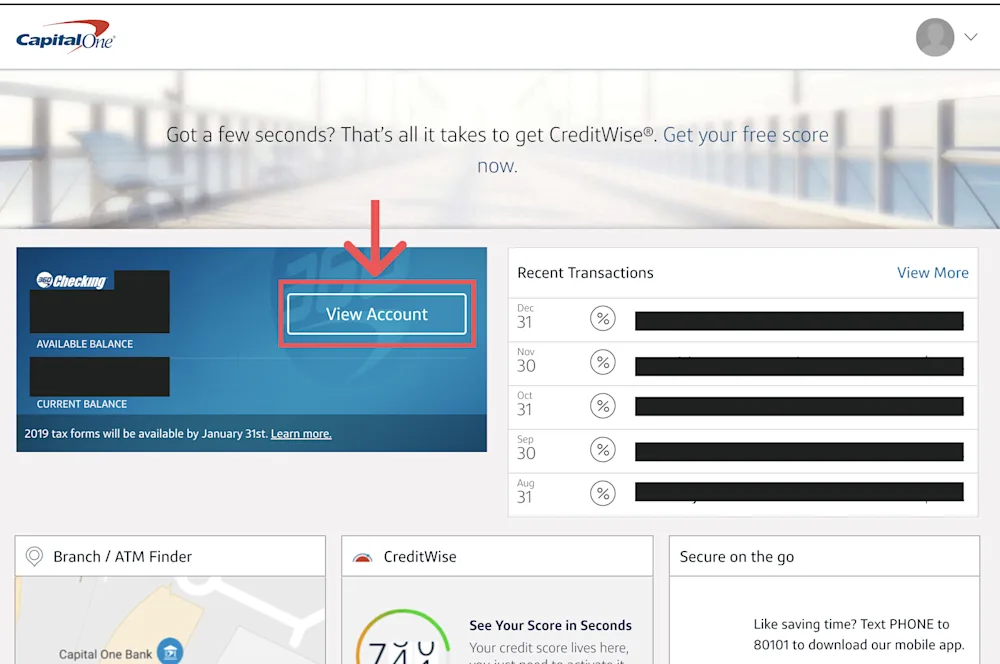
Step #2: Click on “View Account”
You’ll need to do this for every account (ex: checking, credit card) you’d like to scan for tax write-offs.
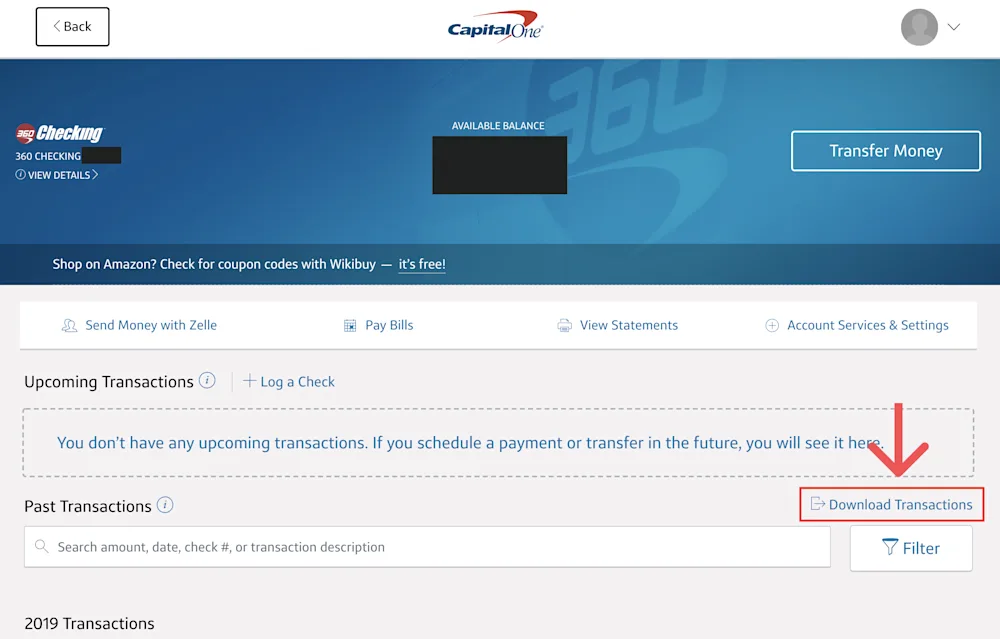
Step #3: Click on “Download Transactions” and choose these settings
Only .csv files are supported by our import feature, and you’ll want to make sure to include the entire date range of transactions you’re looking for.
Then, select the appropriate download settings:
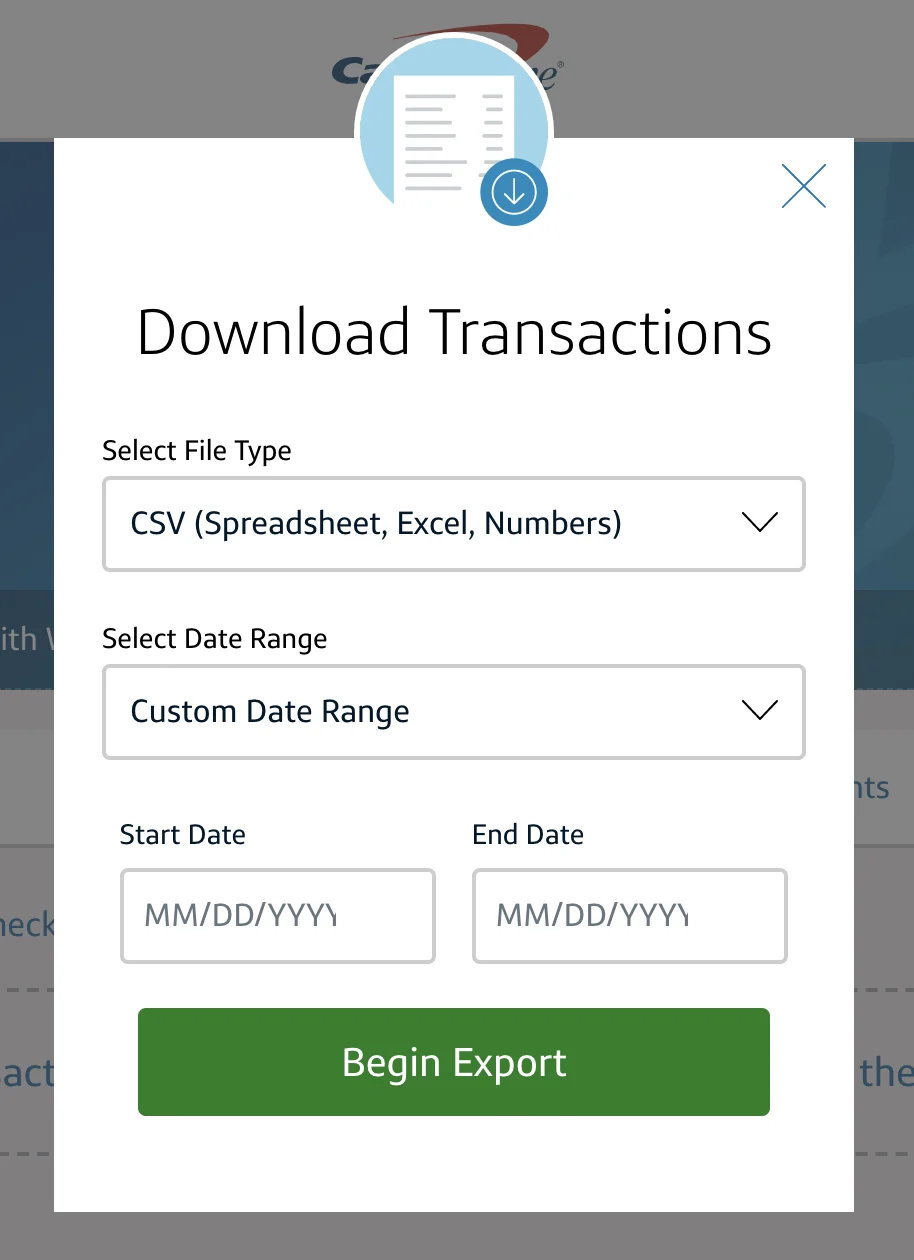
Don’t forget to include the whole date range of transactions you would like us to scan!

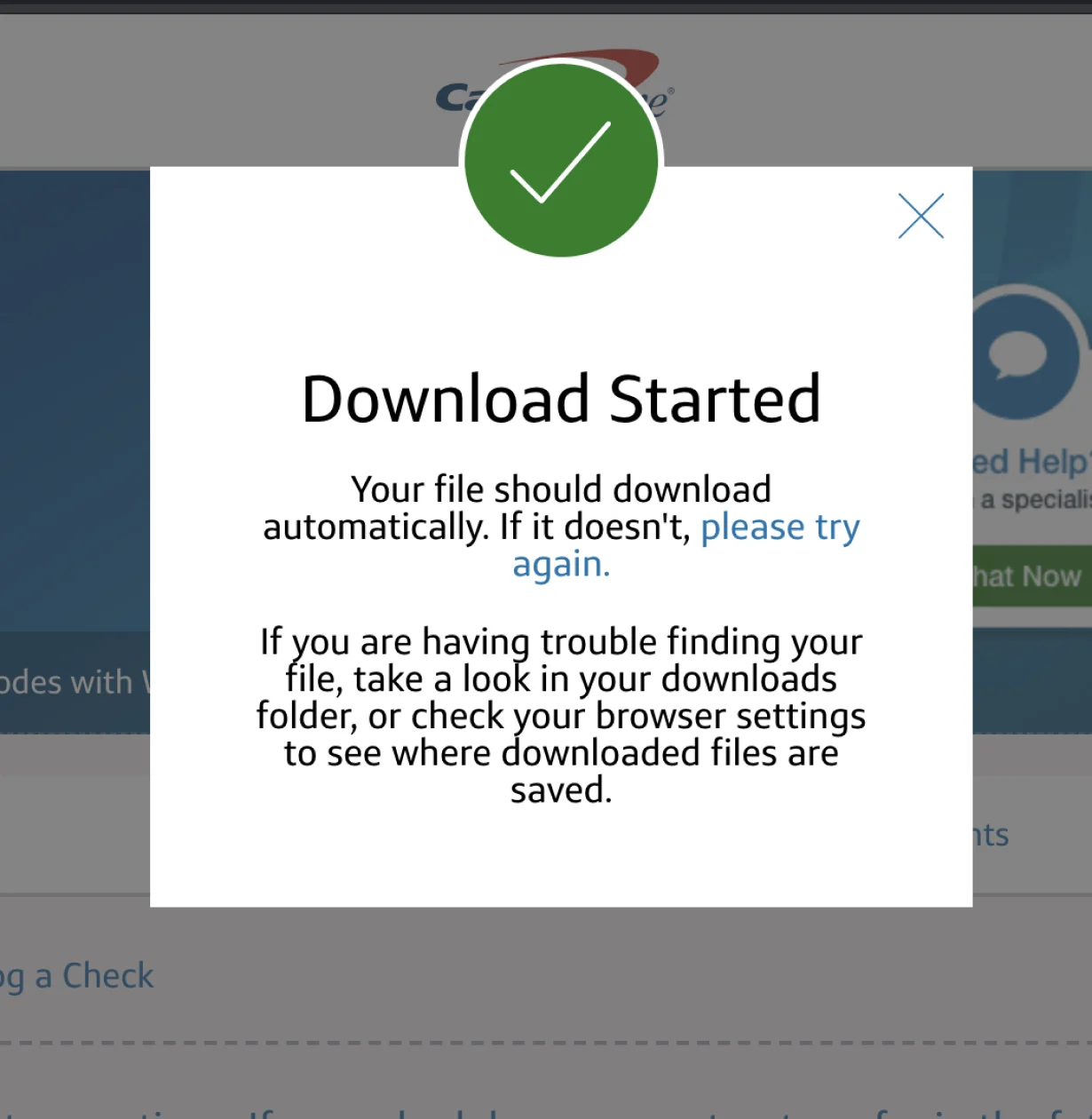
Click done, and the file will be downloaded to your computer.

What tax write-offs can I claim?
Step #4: Skip the export with Keeper!
Are you downloading your Capital One transactions to hand them off to an accountant or sift through them for write-offs on your own? Following the steps above will get you there. But there's a better way.
Download the Keeper app, and you'll be able to automatically find all the tax-deductible purchases you made for work — including anything you paid for using your Capital One account. There's no need to download or upload anything. Just log into your Capital One account, and our tax receipt organizer will automatically categorize your transactions for you.
Over 1M Americans trust Keeper for their complex taxes
The #1 tax app for freelancers, gig workers, and self-employed filers.
Get started free

It's the easiest way for freelancers with Capital One accounts to get organized for tax season.

Product leader and ex-CEO / founder of Keeper. He's been quoted as an authority on taxes in U.S. News & World Report, Vice, Forbes, and others. Paul holds an A.B. from Harvard University.
View full bioThis article is for informational purposes only and isn’t tax, legal, or financial advice. Tax rules change and depend on your situation, so talk to a tax professional about yours.