
Receipts for Taxes: What Do You Need to Keep?
You need some form of proof for your tax write-offs, but does it have to be a paper receipt? Not necessarily. Learn the rules!
 Justin W. Jones, EA, JDJustin is an IRS Enrolled Agent, allowing him to represent taxpayers before the IRS. He loves helping freelancers and small business owners save on taxes. He is also an attorney and works part-time with the Keeper Tax team.

What the IRS says about paper receipts
Freelancers often think they need physical receipts for every single tax deduction. That's actually a myth. To debunk it, we're going straight to the source — the IRS.
The IRS says to keep records for your business tax deductions indicating:
What you bought
When you bought it
How much you spent
And guess what? It doesn't mention requiring paper receipts at all.
What kind of records can you use for your taxes?
You can satisfy the IRS’s need for documentation with two simple things:
Bank statements
Credit card statements
This comes directly from the IRS’s list of ways you can substantiate your expenses. In its own words, the “documents for expenses include the following”:
Canceled checks or other documents reflecting proof of payment / electronic funds transferred
Cash register tape receipts
Account statements
Credit card receipts and statements
Invoices
Your bank statements are the “other documents reflecting… electronic funds transferred” mentioned in the IRS’s list of acceptable docs: the 21st century’s answer to canceled checks.
You’ll notice that the old-school paper receipts that clutter file folders and shoeboxes — those “cash register tape receipts” — don’t even appear at the top of the list.
Both bank and credit card statements tend to contain all the critical information: what, when, and how much. And if you track your expenses with Keeper, we'll automatically scan your accounts for write-offs and generate the necessary records for you.
Over 1M Americans trust Keeper for their complex taxes
The #1 tax app for freelancers, gig workers, and self-employed filers.
Get started free

When are receipts not required?
Rule of thumb: Receipts aren’t strictly required as long as the expense cost less than $75.
That’s true even if you pay with cash, which means you won’t have a credit card or bank statement to corroborate your purchase. You still won’t necessarily need your receipt, provided your expense is “reasonable and ordinary.”
This is because of a tax principle called the “Cohan rule,” which allows you to estimate your write-off amount for something you bought for work, but don’t have a record of buying. It was established in the famous Cohan vs. Commissioner court case from 1930.
Of course, the Cohan rule has some exceptions.
When are receipts required?
If you spend more than $75 on a cash purchase, you’ll still want to keep your receipt.
This goes for all types of expenses. If you walk into an Apple store and pay cash for a pair of AirPods for work calls, hang onto your receipt. The same goes if you rack up a lot of shipping fees at UPS and pay with the bills in your wallet.
Special rules business travel, meals, and gifts
Some kinds of purchases require a little extra substantiation, though they still mostly follow the $75 rule. These are:
There’s also so-called “listed property”: specific types of depreciable assets that you use for both work and personal purposes — like a car. (But it’s fairly unlikely you’d be buying a car without some kind of receipt anyway!)
If you pay for business travel, meals, or gifts, you should:
Hang on to your receipt if you spent more than $75 (for something other than lodging)
Keep a little extra proof on hand, just to be safe
Let’s talk about both of these requirements.

What to do about receipts
For business travel, meals, and gifts, the IRS actually doesn’t require “documentary evidence” — like receipts or bank statements — if your expense was under $75. So you’re technically in the clear if, for example, you:
🚕 Take a short taxi ride on your way to a conference in another city
🍝 Grab a cost-effective power lunch with a client at Olive Garden
🛍️ Buy a client a small souvenir
One exception: Travel lodging
Confusingly, there is one exception to this exception: lodging while traveling.
If you stay at a hotel on a business trip, pay in cash, and somehow manage to spend less than $75, you should keep your receipt.
Still, let’s face it: Even if you could find those rates anywhere, you probably booked online anyway — which means you’ll have a convenient confirmation email to use as documentary evidence.
What kind of extra proof to keep
By “extra proof,” we mean a record of what you were doing and who else was involved. This proves that you paid for the expense for business purposes.
Chances are, you’ll have most of this information anyway in the form of digital breadcrumbs. That can be an email about your upcoming business trip, or a calendar event for lunch with a client.
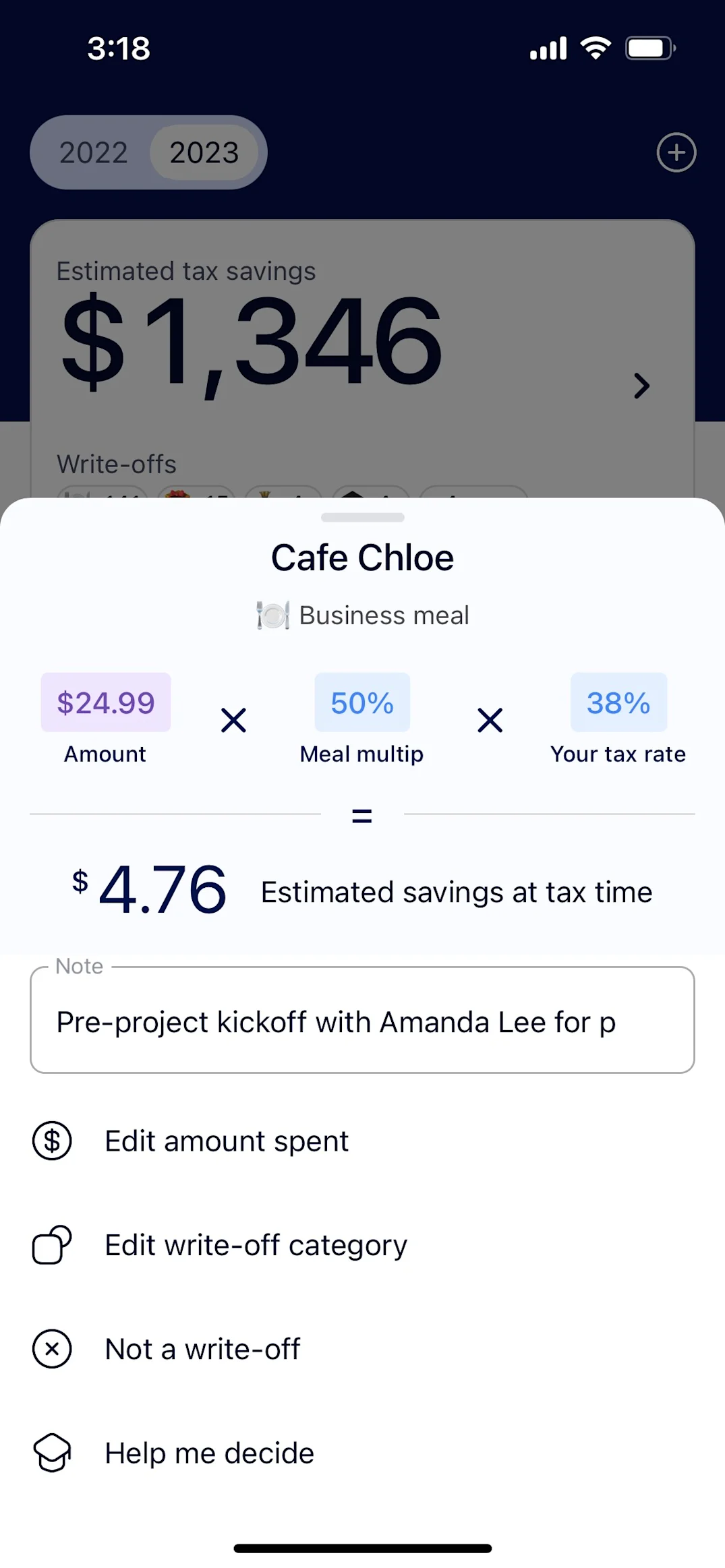
What should you do if these kinds of breadcrumbs aren’t available? Just jot down a quick note about the purpose of your purchase. You can do this right in the Keeper app.
What to do if you get audited
If you do get audited after going paperless, don’t worry. The IRS is legally required to accept digital forms of proof for your write-offs, including bank and credit card statements.
Even if you forgot to document a cash purchase of over $75, you’re not completely out of luck. That’s where your digital breadcrumbs come in. If you’re able to rustle up, say, an email to a contractor discussing the cash payment you gave them, you can use this to reconstruct that expense.
At Keeper, we’re on a mission to expose regressive misconceptions — like the myth that paper receipts are the only acceptable kind of tax record.
At the end of the day, we hate seeing freelancers and contractors held back from getting the tax savings they deserve.
You can bet that corporations claim every tax write-off possible. So you should too. And antiquated recordkeeping practices should not be holding you back.
Read next

The Best App for Tracking Tax Deductions
I've been freelancing or side hustling for 10 years. I've tested everything under the sun, and Keeper is by far my favorite way to track receipts for taxes. Here's how it's improved my financial health.
 By Amanda Gray
How To File Your Self-Employment Taxes in 7 Easy Steps

Ultimate Guide to Car Tax Deductions and Mileage

Justin is an IRS Enrolled Agent, allowing him to represent taxpayers before the IRS. He loves helping freelancers and small business owners save on taxes. He is also an attorney and works part-time with the Keeper Tax team.
View full bio